- The Government of India on 7 January 2014 launched the nation's first comprehensive adolescent health programme named Rashtriya Kishor Swasthya Karyakram (RKSK) in New Delhi. The RKSK defines an adolescent as a person within 10-19 years of age, in urban and rural areas, includes both girls and boys, married and unmarried, poor and affluent, whether they are in school or out of school. This broad definition helps to address the multitude problems of adolescents across various groups and categories. The programme is committed at promotion of adolescent health mission across India and would address to the health needs of 253 million adolescents constituting 21 percent of the total population in the country.
The vision of the programme is that all adolescents in India are able to realize their full potential by making informed and responsible decisions related to their health and well-being.
RKSK has six priority (programme) areas as below:

Target Group:
The new adolescent health (AH) strategy focuses on age groups 10-14 years and 15-19 years with universal coverage, i.e. males and females; urban and rural; in school and out of school; married and unmarried; and vulnerable and under-served.
Objectives of the programme:
i. Improve Nutrition
-
- Reduce the prevalence of malnutrition among adolescent girls and boys (including overweight/obesity)
- Reduce the prevalence of iron-deficiency anaemia (IDA) among adolescent girls and boys
ii. Enable sexual and reproductive health
-
- Improve knowledge, attitudes and behaviour, in relation to SRH
- Reduce teenage pregnancies
- Improve birth preparedness, complication readiness and provide early parenting support for adolescent parents
iii. Enhance Mental Health
-
- Address mental health concerns of adolescents
iv. Prevent injuries and violence
-
- Promote favourable attitudes for preventing injuries and violence (including GBV) among adolescents
v. Prevent substance misuse
-
- Increase adolescents' awareness of the adverse effects and consequences of substance misuse
vi. Address conditions for NCDs
-
- Promote behaviour change in adolescents to prevent NCDs such as cancer, diabetes, cardio-vascular diseases and strokes
Strategies:
A. Community based interventions
-
- Peer Education (PE)
- Quarterly Adolescent Health & Wellness Day (AHWD)
- Weekly Iron and Folic Acid Supplementation Programme (WIFS)
- Menstrual Hygiene Scheme (MHS)
B. Facility based interventions
-
- Strengthening of Adolescent Friendly Health Centres (AFHC)
- within Health & Family Welfare - FP, MH (incl VSHND), RBSK, National Tobacco Control Programme,National Mental Health Programme, NCDs and IEC
- with other departments/schemes – Social Welfare (ICDS,SABLA), Youth Affairs and Sports etc.
- (Adolescent Empowerment Scheme, National Service Scheme, NYKS, etc)
D. Social and Behaviour Change Communication with focus on Inter Personal Communication
RKSK Status in Assam
-
- All components of RKSK programme is being implemented in all the Districts of the state.
- Other adolescent Health components like Menstrual Hygiene Scheme (Low cost sanitary napkins @Rs.6/- per pack to adolescent girls by ASHAs), Weekly Iron & Folic Acid Supplementation (WIFS) programme and counselling centres (Adolescent Friendly Health Centres) are implemented in all 33 districts.
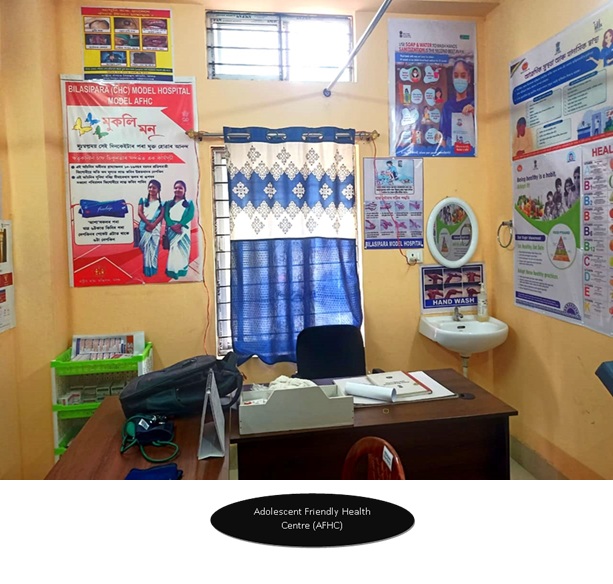
- Total 91 Adolescent Friendly Health Centres (AFHCs) are established in the state at Medical College, DH, SDH and CHC level. Total 86 Adolescent Friendly Health Centres (AFHC) are functional with dedicated counselors and ANMs.
- Total 38372 Peer Educators will be selected in 34 Districts till the end of FY 2025-26. (2 boys and 2 girls from each village/1000 population have been selected as Peer Educator (PE) under each ASHA). (Detail in RKSK implementation guidelines)
- Each Peer Educator is expected to form a group of 15-20 boys and girls (separate group of boys and girls) respectively from their community and conduct a two hour sessions per week–using PE kits
- PEs are being provided non-monetary incentive for their contribution.
- Adolescent Health Clubs will be formed at the SC level in all Districts.
- Menstrual Hygiene Programme is going on in all 35 districts.
- WIFS programme is going on in all 35 districts.
- School Health& Wellness Programme (SHWP) under Ayushman Bharat was launched on 12 February, 2020. It's a joint initiative of Ministries of H&FW and Ministry of Education.
- In Assam SHWP will be implemented in 17 Districts namely Baksa, Barpeta, Darrang, Dhubri, Goalpara, Hilakandi,Udalguri, Charideo, Jorhat, Kokrajhar, Nagaon, Tinsukia, West KarbiAnglong, Dirugarh, Kamrup (M), Bongaigaon and Nalbari.
- Expected coverage of Schools 5515 (Elementary and HS).
- State Resource Groupsare formed consisting School Teacher, Medical Officers and Lectures of DIET and trained them physically.
Images: